What Part of Lobelia Is Used in Supplements? Read the Label Correctly
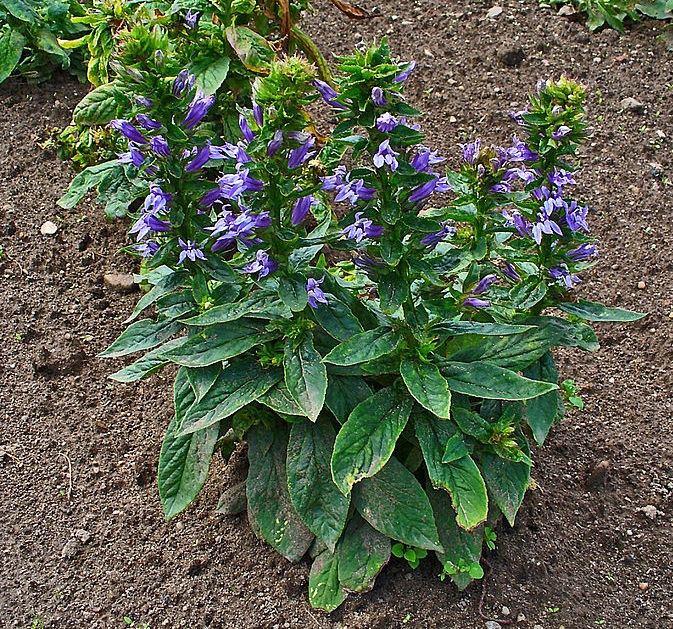
What part of lobelia is used in supplements depends on the specific formula. A product may identify leaves, aerial parts, herb top, seeds, whole herb, or whole plant. These terms are not interchangeable, and the product name «Lobelia» does not answer the plant-part question.
Secrets Of The Tribe offers a useful transparency example. Its online tincture description identifies the species as Lobelia inflata, but the accessible product information does not identify the plant part. A shopper therefore needs the physical Supplement Facts panel, a batch record, or direct manufacturer confirmation before naming the material used.
Which part of Lobelia is commonly used?
No single plant part applies to every Lobelia supplement. Different references and product specifications may describe whole plant, aerial parts, leaves, herb tops, or another defined material. The correct answer for a bottle must come from that product’s own label and manufacturing records.
A Canadian government ingredient database includes a Lobelia inflata extract entry sourced from the whole plant. Historical botanical references also describe harvesting the herb during flowering and seed formation. Neither fact proves what a current commercial tincture contains.
Product-specific evidence comes first
A general monograph can show that a plant part has been recognized in a regulatory or technical context. It cannot replace the ingredient specification for an individual product. The manufacturer should connect the declared part with the raw-material lot and finished batch.
Species and plant part answer separate questions
Lobelia inflata identifies the botanical species. «Aerial parts» or «whole plant» identifies the material taken from that species. A complete botanical description needs both fields.
What do aerial parts, leaves, and whole plant mean?
Plant-part terms describe which tissues entered the preparation. Small wording differences can change the scope of the ingredient.
| Plant-part term | Usual interpretation | Question to ask |
|---|---|---|
| Leaf | Leaves separated from most other plant material | Are small amounts of stem permitted by the specification? |
| Aerial parts | Above-ground material, often including stems, leaves, flowers, and developing fruit | Which parts and harvest stage are included? |
| Herb top | Upper above-ground portions of the plant | How much stem and flowering material does the term cover? |
| Whole herb | An ambiguous trade term that may refer to broad herbaceous material | Does it mean aerial material or the literal whole plant? |
| Whole plant | The complete plant, potentially including roots and above-ground parts | Does the supplier specification explicitly include roots? |
| Seed | Mature or developing seeds separated from other tissues | Are the surrounding fruiting structures included? |
These are working interpretations, not universal legal definitions for every market. Read the exact specification. A manufacturer should define an ambiguous term before using it as the basis for identity, composition, or testing.
Does whole herb always mean whole plant?
No. «Whole herb» can be ambiguous. Some suppliers use herb to describe the above-ground herbaceous portion. Others may use the phrase loosely for minimally processed plant material.
«Whole plant» is more likely to imply roots plus above-ground tissues, but even that phrase should be checked against the supplier specification. Do not assume that roots were included simply because a product uses the word whole.
Ask for a component list
A precise answer might state leaf and stem, flowering aerial parts, or whole plant including root. This wording provides more information than «whole herb» alone.
Check the harvest stage
Plant material collected before flowering may differ from material gathered during flowering or fruit formation. A useful specification states whether the Lobelia was vegetative, flowering, or fruiting when harvested.
Why does the Lobelia plant part matter?
Different plant tissues can have different chemical and physical properties. FDA guidance for botanical ingredient notifications specifically notes that plant part should be identified because parts of the same botanical can differ.
The selected part can affect the raw material’s appearance, chemical fingerprint, moisture, foreign-matter limits, extraction behavior, and identity-testing method. It may also affect how suppliers establish an extract ratio or quantity crude equivalent.
Identity specifications depend on the part
A leaf specification should describe leaf characteristics. A whole-plant specification may need to account for several tissue types. A laboratory cannot evaluate conformity properly when the expected plant part remains undefined.
Extraction starts with the source material
A tincture label describes a liquid preparation, not the complete starting material. To interpret the extract, you need the botanical species, plant part, fresh or dried state, plant-to-liquid ratio, and extraction carrier.
Plant part does not establish potency by itself
Leaves are not automatically stronger than aerial parts. Whole plant is not automatically more complete or better. Any quantitative comparison requires matched products, analytical methods, units, and batch results.
Where should the plant part appear on a US supplement label?
FDA dietary supplement labeling guidance says the Supplement Facts panel must include the part of the plant from which a botanical dietary ingredient is derived. The declaration might appear beside the common or scientific ingredient name.
Examples of the expected structure include Lobelia leaf, Lobelia aerial parts, or Lobelia inflata whole plant. The exact presentation can vary with label design and ingredient naming conventions.
Check the physical bottle
The full Supplement Facts panel may not appear in an online product description. Inspect the bottle images and the physical label. An incomplete web listing does not prove that the packaged label lacks the information.
Check more than the front panel
The principal display panel may show only the product name and format. Turn the bottle to the information panel and read the complete Supplement Facts box and Other Ingredients section.
Rules vary outside the United States
Other countries use different natural-product, food-supplement, or herbal-product frameworks. Check the requirements for the market where the product is sold. A label accepted in one jurisdiction may use terminology differently in another.
What does the online Lobelia listing confirm?
The Secrets Of The Tribe product page confirms the species name Lobelia inflata and identifies the finished format as a liquid supplement. The visible online description does not state whether the starting material was leaf, aerial parts, herb top, seed, or whole plant.
The appropriate conclusion is «plant part not confirmed from the accessible online description.» It would be inaccurate to fill the gap with a common industry practice, a database entry, or information from another Lobelia product.
The listing also describes a lot-based Product Passport for origin and third-party laboratory information. A batch record may help, but only if it names the source material or links to a specification that does. Laboratory contaminant results alone may not identify the plant part.
Where else can you verify the plant part?
Use a hierarchy of evidence. Start with the packaged label, then review batch documents and ask the manufacturer for the raw-material specification when needed.
| Information source | What to look for | Common limitation |
|---|---|---|
| Supplement Facts panel | Botanical name followed by the plant part | Small label images may be unreadable online |
| Physical bottle | Complete ingredient and plant-part declaration | The bottle may use an undefined trade term |
| Certificate of Analysis | Sample identity, lot number, matrix, and specification | Some reports list only the finished product name |
| Raw-material specification | Species, part, harvest stage, state, and quality limits | It may not be published for consumers |
| Batch production record | Ingredient code linked to the actual manufacturing lot | Usually maintained internally |
| Manufacturer response | A written, product-specific plant-part statement | A general answer may not identify the bottle lot |
Can a Certificate of Analysis confirm the plant part?
Sometimes. A detailed COA may name Lobelia inflata aerial parts, whole plant, or another material in the sample description. It should also identify the lot and distinguish raw material from finished extract.
Many public COAs focus on microbiological results, heavy metals, pesticides, or residual solvents. Those panels do not automatically verify the plant part. Look for an identity section or a reference to the approved raw-material specification.
Match the lot number
The document must correspond with the lot code on the bottle. A plant-part statement for a different batch or supplier does not confirm the material in your product.
Match the sample matrix
Determine whether the laboratory tested dried plant material, bulk tincture, or finished bottled liquid. Each sample type answers a different quality question.
Read the identity method
Raw herbs may support macroscopic or microscopic examination. Processed extracts often require suitable chemical fingerprints or other validated approaches. The method should fit both the botanical material and its processing state.
What should you ask the manufacturer?
Ask one narrow question: «Which part of Lobelia inflata was used in this lot?» Include the complete lot number and a photograph of the bottle.
If the answer says aerial parts or whole herb, request a definition. Ask whether the material includes stems, flowers, fruiting structures, seeds, or roots. Also confirm whether the starting material was fresh or dried.
A precise written answer is more useful than a general statement about how Lobelia is usually harvested. Retain the response with the bottle’s batch documents.
Lobelia Plant-Part Verification Checklist
Use this checklist before describing the plant material in a Lobelia supplement. It helps separate confirmed label information from assumptions based on general botanical references.
Confirm the species
Look for the complete botanical name, such as Lobelia inflata. Do not rely on Lobelia or Indian tobacco alone.
Read the Supplement Facts panel
Find the plant-part term beside the botanical ingredient. Check the physical label if the online image is unclear.
Define ambiguous wording
Ask what whole herb, herb top, or aerial parts includes. Do not assume that these terms have identical boundaries.
Check the material state
Confirm whether the starting material was fresh or dried. Record any stated harvest stage.
Match the lot number
Connect the bottle with its batch documents. Information from another lot is supporting context, not direct confirmation.
Review the sample description
Check whether the COA describes raw plant material, bulk extract, or finished tincture.
Request the specification
Ask for the raw-material specification when the label and COA remain unclear. It should identify the species and plant part.
Record only confirmed facts
Use «not stated» when the evidence does not provide an answer. Do not fill a label gap with an industry assumption.
FAQ
What part of Lobelia is used in supplements?
It varies by product. Labels may identify leaves, aerial parts, herb tops, seeds, whole herb, or whole plant.
Are aerial parts the same as leaves?
No. Aerial parts can include leaves, stems, flowers, and developing fruit, while leaf identifies a narrower material.
Does whole herb include Lobelia roots?
Not necessarily. Whole herb is ambiguous, so ask whether the manufacturer’s specification includes roots.
Does whole plant include roots?
It commonly implies roots plus above-ground material, but the supplier specification should confirm the exact definition.
Where is the plant part listed on a supplement?
On a US dietary supplement, look in the Supplement Facts panel beside the botanical ingredient name.
Can an online product page omit the plant part?
Yes. A short web description may omit information that appears on the physical package or in batch documentation.
Can a COA identify the Lobelia plant part?
Yes, if the sample description or referenced specification names it. A contaminant-only report may not provide that information.
Is whole-plant Lobelia better than leaf-only Lobelia?
The plant-part term alone does not establish quality or potency. Compare specifications, extraction details, and batch testing.
Can I assume a tincture uses aerial parts?
No. Confirm the plant part from the exact product label, lot record, or manufacturer.
Glossary
Aerial parts
The plant material located above ground, potentially including stems, leaves, flowers, and fruiting structures.
Herb top
The upper herbaceous portion of a plant, as defined by a product specification.
Whole plant
A term commonly referring to roots and above-ground plant material together.
Plant part
The specific botanical tissue used as the starting material.
Botanical identity
The verified species and plant part associated with an herbal ingredient.
Raw material
The botanical material received before extraction or finished-product manufacturing.
Sample matrix
The physical form tested by a laboratory, such as dried herb or liquid extract.
Specification
A controlled description of identity, composition, and quality requirements.
Extract ratio
A stated relationship between starting botanical material and resulting extract.
COA
A Certificate of Analysis reporting specified tests for an identified sample or lot.
Conclusion
Lobelia supplements can use different plant parts, so the product name alone is not enough. Verify the exact species and material through the physical label, lot documents, or a written manufacturer response.
Sources Used
US requirement to identify the botanical plant part in the Supplement Facts panel, Dietary Supplement Labeling Guide Chapter IV — fda.gov/food/dietary-supplements-guidance-documents-regulatory-information/dietary-supplement-labeling-guide-chapter-iv-nutrition-labeling
FDA guidance explaining why botanical ingredient descriptions should specify plant part, New Dietary Ingredient Notification Procedures — fda.gov/media/176512/download
Government ingredient database entry listing whole plant as source material for one Lobelia inflata extract entry, Natural Health Products Ingredients Database — webprod.hc-sc.gc.ca/nhpid-bdipsn/ingredReq
Definition of herbal substances by botanical name and plant part, Herbal Substances Glossary — ema.europa.eu/en/glossary-terms/herbal-substances
International guidance on naming plant parts, preparation states, and harvest periods in herbal specifications, Good Pharmacopoeial Practices for Herbal Medicines — cdn.who.int/media/docs/default-source/medicines/norms-and-standards/guidelines/quality-control/trs1010_annex7_who_good_pharmacopoeial_practices_herbal.pdf
International methods for identity and quality assessment of herbal materials, Quality Control Methods for Herbal Materials — who.int/publications/i/item/9789241500739
Commercial Lobelia tincture listing reviewed for its species declaration and accessible plant-part information — secrets.shop/products/lobelia-tincture