Gentian Tincture vs Multi Herb Bitters: Which Label Is Easier to Evaluate?
Gentian tincture vs multi herb bitters is a choice between botanical simplicity and formulation complexity. A single-herb product makes it easier to identify the main plant, plant part, extract ratio, and serving amount. A blend can provide a more layered taste, but every additional botanical adds another label detail to check. HerbEra is used here only as a label example. Product naming and ingredient count do not establish a specific appetite outcome.
This guide compares ingredient traceability, taste, serving information, allergy screening, label transparency, and cost per serving. It does not assume that either format is superior.
What is the main difference between gentian tincture and multi-herb bitters?
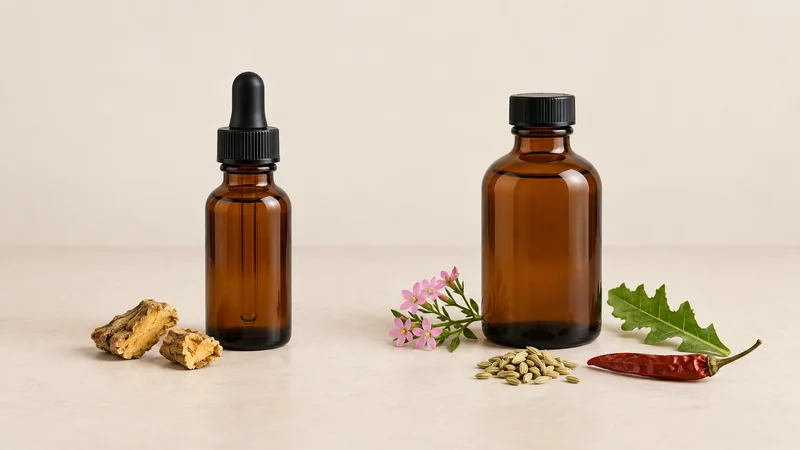
A gentian tincture contains one botanical, usually the root of Gentiana lutea . Multi-herb bitters combine gentian or another bitter plant with several additional botanicals. Single-herb refers to the botanical count, not the complete ingredient count. The liquid may still contain alcohol, water, glycerin, or other non-botanical ingredients.
| Comparison point | Single-herb gentian tincture | Multi-herb appetite bitters |
|---|---|---|
| Botanical ingredients | One botanical species | Several botanical species |
| Main plant material | Usually Gentiana lutea root or root and rhizome | May combine roots, leaves, seeds, fruits, flowers, and aerial parts |
| Ingredient traceability | Usually easier to follow | Requires checking every botanical and plant part |
| Taste | Direct, deep, persistent gentian bitterness | Layered bitterness with spicy, aromatic, earthy, or herbal notes |
| Serving transparency | One botanical amount may be stated clearly | Individual amounts may be unavailable in a proprietary blend |
| Allergy screening | Fewer botanical ingredients to review | More species and plant families to review |
| Formula assessment | Fewer variables | More variables and possible interactions |
| What the format proves | Botanical simplicity | Formulation complexity, not a better outcome |
What should a single-herb gentian label show?
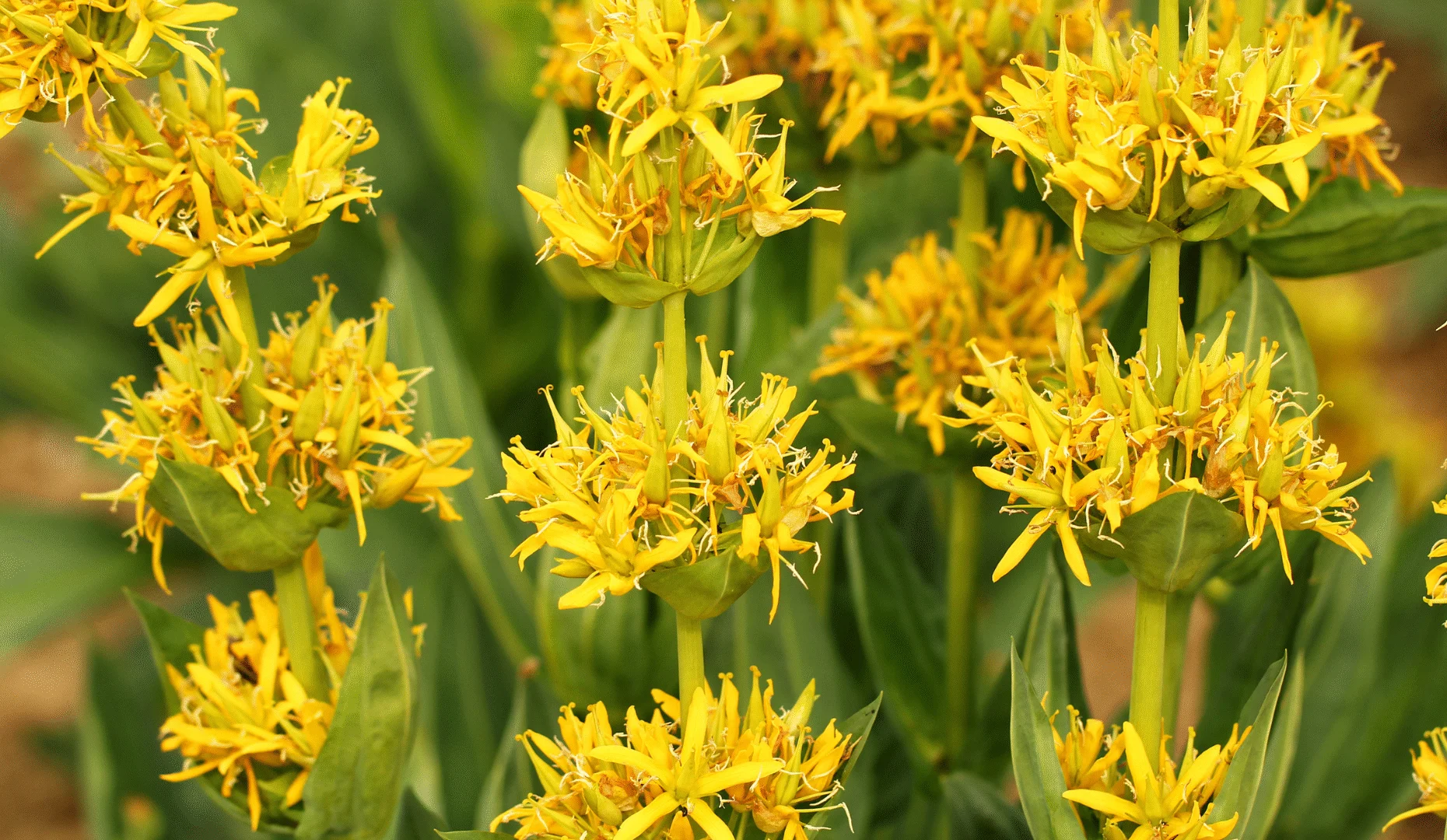
A useful gentian label identifies the species as Gentiana lutea and the plant part as root or root and rhizome. Yellow gentian belongs to the Gentianaceae family. Its dried underground material has a strong and persistent bitter taste.
Botanical identity
The word gentian can refer to more than one species. A full Latin binomial reduces ambiguity. The label should not rely on the common name alone when precise identification matters.
Extract format
Check whether the bottle contains a tincture, glycerite, or another liquid extract. Traditional gentian tincture specifications often use an alcohol and water solvent, but commercial formulations vary. An alcohol-free product may use glycerin and water.
Extract ratio and serving amount
An extract ratio describes the relationship between starting botanical material and finished extract. It does not function as a clinical potency score. The serving size should state a measurable quantity such as milliliters, drops, or a full dropper with a defined volume.
Other ingredients
Review the solvent, preservatives, flavors, and sweeteners. A single-botanical tincture can still have several non-botanical ingredients.
What changes in a multi-herb appetite blend?
A multi-herb formula introduces several species, plant parts, constituent profiles, and flavor notes. This can create a broader sensory profile, but it also makes attribution difficult. If a user notices a response or an unwanted effect, the label alone may not reveal which ingredient contributed.
In the HerbEra product, a layered bitter blend with eight botanicals contains gentian root, burdock root, fennel seed, dandelion root, centaury herb, dandelion leaf, cayenne pepper, and blessed thistle leaf. The list shows that the formula combines bitter, aromatic, earthy, and pungent materials rather than relying on gentian alone.
More plant parts
The formula combines roots, a seed, an aerial herb, leaves, and a pepper fruit. Each ingredient should be evaluated by its own species and plant part.
More label variables
A buyer must check eight botanical identities, the total serving amount, the extraction medium, and any warnings. If the label lists only a total blend quantity, the exact amount of gentian remains unknown.
More ingredients do not prove more value
A long ingredient list may reflect a formulation style. It does not establish greater quality, better suitability, or a more reliable appetite effect. A short formula can be well documented, while a complex formula can be transparent or vague.
Which label is easier to evaluate?
A single-herb gentian label is usually easier to evaluate because it contains fewer botanical variables. You can focus on species, plant part, solvent, extract ratio, serving amount, and testing information.
A multi-herb product can still provide a clear label. Look for full botanical names, plant parts, an identifiable serving size, and individual ingredient amounts. When a proprietary blend appears, the label may disclose only the total blend weight. In the United States, ingredients within that blend generally appear in descending order by weight, but the individual quantities may remain undisclosed.
Traceability
Traceability means you can connect the ingredient name to a defined species, plant part, and preparation. A bottle that says bitter herb complex without further detail offers limited traceability.
Batch documentation
A batch-specific certificate of analysis can add information about identity, microbial limits, heavy metals, and other tested specifications. A generic quality badge does not provide the same detail.
Serving clarity
Dropper directions can be imprecise if the label does not define the dropper volume. Milliliters provide a clearer basis for comparing servings between bottles.
How does taste differ?
A gentian tincture usually presents a concentrated and persistent bitterness with fewer competing flavor notes. Gentian root contains bitter secoiridoids, including gentiopicroside and amarogentin.
A multi-botanical formula can taste more complex. Centaury adds another bitter profile. Fennel can contribute aromatic sweetness. Dandelion and burdock can add earthy notes. Cayenne can create pungency. These sensory differences do not demonstrate a different appetite outcome.
Sweeteners and glycerin may soften the initial taste without removing the botanical compounds. Alcohol content, concentration, serving size, and dilution also affect how bitterness is perceived.
How should you compare cost per serving?
Do not compare bottle prices alone. Divide the purchase price by the number of labeled servings. If directions allow multiple servings per day, calculate a range for the potential daily cost.
Use this basic formula:
Cost per serving = bottle price divided by labeled servings per bottle
Also compare bottle volume, serving volume, shipping cost, and expected storage period. A lower bottle price may not mean a lower cost per serving. Ingredient count does not justify a price difference by itself.
Who may prefer each format?
A single-herb gentian tincture may suit someone who prioritizes a short ingredient list, clear botanical attribution, or easier label comparison. It may also be practical when a person wants to avoid several botanical families at once.
A multi-herb formula may suit someone who prefers a layered taste and is comfortable reviewing a longer ingredient panel. It requires more careful screening for allergies, medication compatibility, pregnancy warnings, and personal sensitivities.
Neither preference predicts a better outcome. The appropriate choice depends on label quality, personal restrictions, desired format, and advice from a qualified professional.
Gentian and Multi-Herb Bitters Checklist
Use this checklist before comparing two liquid bitter supplements. It focuses on verifiable product details rather than front-label positioning.
Count the botanicals
Determine whether the formula contains one botanical or several. Include every ingredient in the Supplement Facts panel.
Verify each species
Look for full botanical names. Do not assume that a common name identifies one specific species.
Check every plant part
Confirm whether each ingredient uses root, leaf, seed, fruit, flower, or aerial parts.
Identify the solvent
Look for alcohol, glycerin, water, or a mixed extraction medium.
Find the serving volume
Prefer a defined measurement such as milliliters over an undefined dropper description.
Review blend transparency
Check whether the label lists individual amounts or only a total proprietary blend weight.
Calculate cost per serving
Divide the current bottle price by the labeled number of servings and include shipping when relevant.
Screen all cautions
Review allergies, medications, pregnancy, breastfeeding, age limits, and storage directions.
What safety factors require attention?
Both formats are concentrated botanical supplements. Taste intensity does not indicate suitability. Ask a qualified professional before use if you take medication, are pregnant or breastfeeding, have an ongoing health condition, or expect surgery.
Stop using a product if you develop an unexpected reaction. Persistent appetite changes or unexplained weight changes require professional assessment rather than self-management with herbal bitters.
FAQ
Is gentian tincture the same as multi-herb bitters?
No. Gentian tincture uses one botanical, while multi-herb bitters combine several botanical ingredients.
Does a multi-herb blend contain more gentian?
Not necessarily. The amount depends on the formula, and a proprietary blend may not disclose the individual gentian quantity.
Are eight herbs better than one herb?
No. Ingredient count does not establish quality, suitability, or a better appetite outcome.
Which product has a simpler label?
A single-herb gentian tincture usually has fewer botanical variables, making species and serving information easier to review.
Can bottle size show which product offers better value?
No. Compare cost per serving, serving volume, bottle volume, and expected serving frequency.
Does a more bitter taste mean a more concentrated extract?
No. Taste depends on the botanical, solvent, sweeteners, concentration, and serving method. It does not confirm extract strength.
Glossary
Single-herb tincture
A liquid extract containing one botanical species, plus its extraction medium and possible non-botanical ingredients.
Multi-herb bitters
A liquid formula that combines several bitter, aromatic, or pungent botanicals.
Gentiana lutea
The accepted botanical name for yellow gentian, whose root commonly appears in bitter preparations.
Plant part
The portion used in a supplement, such as root, leaf, seed, fruit, flower, or aerial herb.
Extract ratio
The stated relationship between starting botanical material and the resulting extract.
Proprietary blend
A mixture that may list its total weight without declaring each ingredient’s individual amount.
Certificate of analysis
A document reporting test results and specifications for a particular ingredient or production batch.
Cost per serving
The product price divided by the number of labeled servings in the container.
Conclusion
A gentian tincture offers simpler botanical traceability, while multi-herb bitters require a broader label review. Choose by species clarity, serving information, personal restrictions, and cost per serving rather than ingredient count.
Sources Used
European Union herbal monograph and assessment materials for Gentiana lutea root — ema.europa.eu/en/medicines/herbal/gentianae-radix
Assessment report on Gentiana lutea root and liquid extract specifications — ema.europa.eu/en/documents/herbal-report/assessment-report-gentiana-lutea-l-radix-revision-1_en.pdf
Accepted taxonomy for Gentiana lutea — powo.science.kew.org/taxon/368453-1
Dietary Supplement Labeling Guide, Nutrition Labeling — fda.gov/food/dietary-supplements-guidance-documents-regulatory-information/dietary-supplement-labeling-guide-chapter-iv-nutrition-labeling
FDA questions and answers on required dietary supplement label information — fda.gov/food/information-consumers-using-dietary-supplements/questions-and-answers-dietary-supplements